
Categories
Buyer Resources, Home Buying, Wichita Falls Real EstatePublished October 27, 2026
Why Aren’t More New Homes Being Built in Wichita Falls?

The Debra West Team
Why Aren’t More New Homes Being Built in Wichita Falls?
Buyers often ask why we don't see more new construction in Wichita Falls, especially affordable new homes.
The simple answer is economics.
Most home builders in our area are not large national companies building hundreds of homes at a time. They are smaller, local builders who purchase land, pay for materials and labor, finance construction and carry the financial risk until the home sells.
And today, making those numbers work has become increasingly difficult.
The Cost of Building Starts Long Before the Foundation
When you see the final price of a new home, it's easy to think primarily about lumber, brick and labor. But a builder's investment begins well before construction.
There is the cost of the lot, site preparation, utilities and infrastructure. Then comes concrete, framing, roofing, windows, HVAC, plumbing, electrical, insulation, cabinetry, flooring and finishes.
Add labor, permits, inspections, insurance and financing costs while the home is under construction.
All of those expenses ultimately become part of the cost of producing the home.
According to the City of Wichita Falls' housing planning documents, both land and construction costs have been rising rapidly. The City cites National Association of Home Builders data showing that construction costs represented 64.4% of the average price of a new home in 2024, compared with 60.8% in 2022.
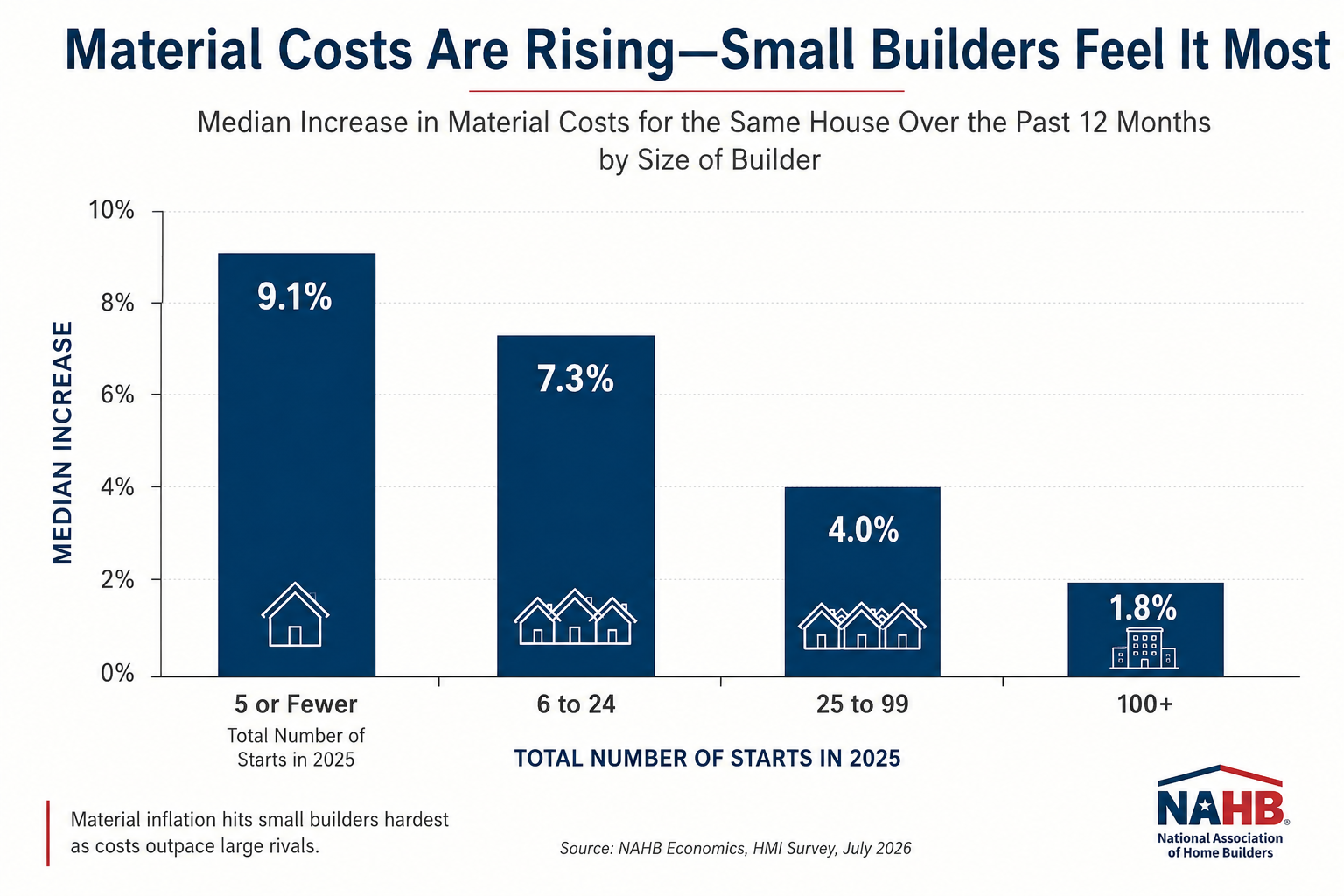
NAHB Economics, HMI Survey, July 2026
Wichita Falls Is Building Fewer Homes Than It Has in the Past
The permit numbers help tell the story.
In 2023, Wichita Falls issued permits for 74 new single-family homes. That compared with 98 in 2022, 94 in 2021 and 130 in 2020.
The City's own 2023 report noted that 74 new homes was below Wichita Falls' 10-year average of 87.
More recent Census permit data continues to show relatively limited residential construction. During the 12 months ending in June 2026, only 69 new residential units were authorized in Wichita Falls.
Sources: National Association of Home Builders, Cost of Constructing a Home and U.S. Census Bureau, Building Permits Survey
That doesn't mean there isn't demand for housing. It means demand and economic feasibility are two different things.
Why Not Just Build Less Expensive Homes?
This is where economics become especially important.
Suppose buyers tell us Wichita Falls needs more new homes at an affordable price point. They're right.
But a builder cannot simply decide to sell a home for $225,000 or $250,000 if acquiring the land and constructing that home costs close to, or more than, the amount the market will pay.
Builders also have to earn a reasonable return for their time, investment and risk.
That creates a difficult equation in markets like ours.
The price buyers can comfortably afford has to meet the price at which a builder can realistically produce the home.
When those two numbers get too far apart, fewer homes get built.
Higher Interest Rates Affect Builders, Too
We usually talk about interest rates in terms of the buyer's mortgage payment, but borrowing costs affect the builder long before the buyer ever applies for a loan.
Many smaller builders finance some portion of the land and construction. For example, carrying $300,000 in construction financing for one year at 5% would cost approximately $15,000 in interest. At 8%, that cost increases to approximately $24,000, a $9,000 increase on just one project. Actual construction loans are typically funded in stages, but the example illustrates how quickly higher rates can affect building costs.
While the home is being built, or sitting completed and waiting to sell, the builder continues paying interest, insurance, taxes and other carrying costs.
At the same time, higher mortgage rates reduce the buyer's purchasing power. Builders can face higher costs to produce a home while buyers have less ability to pay for it.
That's a difficult equation for new construction, particularly for smaller local builders.
Why This Matters for Wichita Falls
Limited new construction affects more than buyers looking for a brand-new home.
Housing supply affects the entire market.
When fewer new homes are added, buyers continue competing for the existing housing stock. Owners who might otherwise move into a new home may remain in their current homes, which can further limit resale inventory.
That's why new construction is an important part of a healthy housing market. The solution isn't simply telling builders to build more.
We have to understand whether land costs, construction costs, financing costs and the final price buyers can afford can all work together.
Our local builders aren't immune to the same economic pressures affecting builders across the country. In many cases, they're dealing with those pressures without the purchasing power and economies of scale available to large national builders.
The Bottom Line
When you look around Wichita Falls and wonder, “Why aren't they building more houses?” the answer may not be a lack of demand. Sometimes, the numbers simply don't work.
Serving Wichita Falls and North Texas
Understand the Market Behind the Price
Whether you are comparing new construction or resale homes, local context helps you make a stronger decision.
Talk With Our TeamThe Debra West Team | RE/MAX Elite Group
Serving Wichita Falls and North Texas

Debra West
BROKER | OWNER | The Debra West Team | REMAX Elite Group
or another way